
A clay diya costs somewhere between ₹5 and ₹30, so it is tempting to think there is nothing to learn about buying one. There is a little, and it is the difference between diyas that burn steadily for three hours and diyas that crack, tip over, drink all the oil or go out in ten minutes.
How a diya is made
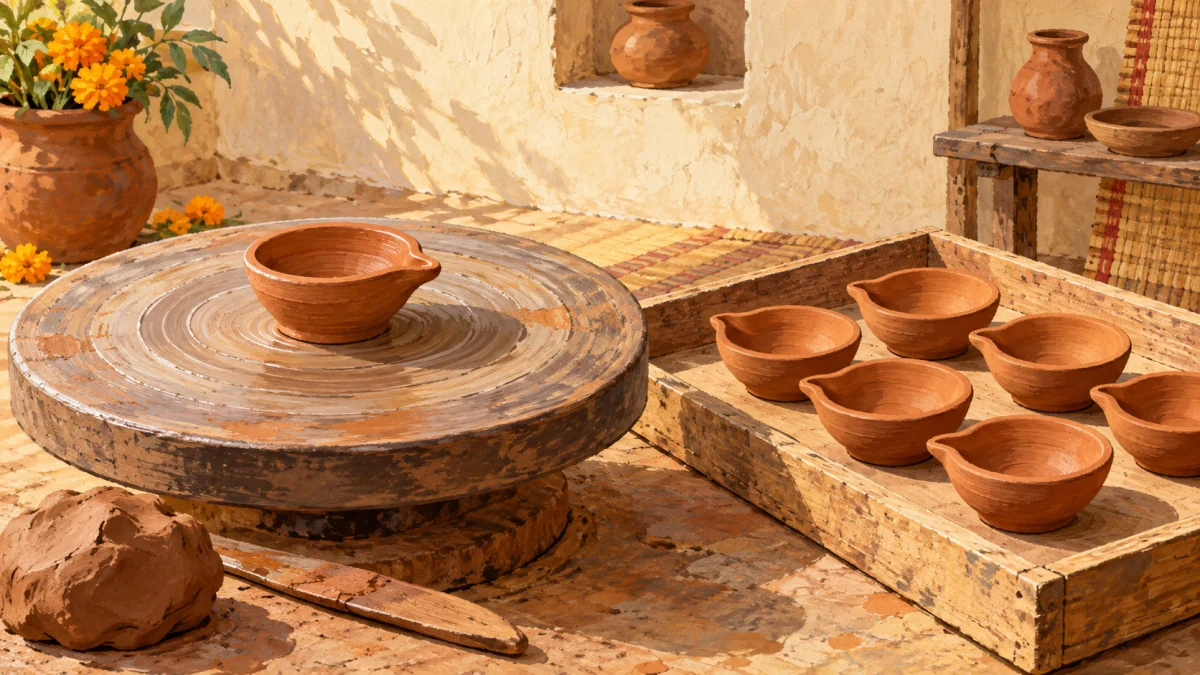
A traditional diya is thrown on a potter’s wheel from local clay, dried in the sun for a day or two, and fired in a simple kiln. It is quick work in skilled hands, and in the weeks before Diwali the potters’ lanes in places like Kumhar Gram in Delhi or Dharavi’s Kumbharwada in Mumbai are lined with rows of them drying. Machine-pressed diyas, made in moulds, are common now too. They are uniform and cheap.
A wheel-thrown diya has a faint spiral inside the bowl and varies a little in shape. A moulded one is identical to its neighbours and often has a seam line. Neither is bad. Hand-thrown diyas tend to be slightly thicker at the base and a little steadier.
Judging quality
Pick one up and check five things:
- Sound. Tap it with a fingernail. A well-fired diya gives a faint ring; an under-fired one gives a dull thud. Under-fired clay is soft, soaks up more oil and cracks with heat.
- Cracks. Look closely at the rim and base in good light. Hairline cracks open up when the diya is hot and full of oil.
- Base. Put it down on a flat surface. It should not rock. A wobbly diya spills.
- Wall thickness. Very thin walls crack; very thick ones stay cool but are heavy and hold less oil. Around 4 to 5 mm is right for a 6 cm diya.
- Wick notch. A small dip in the rim keeps the wick in place. Not every diya has one, but those that do are easier to light and burn more evenly.
If you are buying a set online, look for a stated size, a count, whether it is handmade, and whether painted diyas are sealed. Our hand-painted set of twelve is one example of the kind of set to look for.
Painted or plain?
Plain terracotta is the traditional diya: unglazed, red-brown clay. It is the cheapest and the most natural-looking, and it needs soaking before use (more on that below). It darkens with oil over the years, which plenty of people like.
Painted diyas are decorated with acrylic colours and usually finished with a clear coat. The coat stops the paint bleeding into the oil and makes the clay less absorbent, so they need no soaking and last several seasons. They cost two to four times as much as plain ones.
Glazed diyas are fired with a glass-like coating. They are less common, soak up almost nothing, and behave much like small ceramic bowls.
A sensible mix for most homes: plain diyas for the threshold, the steps and the compound wall, where they might get knocked or left out overnight; painted ones for the windows, the puja corner and the living room, where people see them up close.
How many to buy
Count the spots you will light:
- Either side of the main door: 2
- Along the threshold or steps: 5 or 7
- Window sills, one per window: 3 to 6
- Puja space, four corners: 4
- Living room arrangement: 3 to 5
- Balcony: 5 to 7 (or tealights)
- Kitchen: 1
That comes to 25 to 35 for a typical flat, and nearer 50 for an independent house with a compound wall. Buy about ten percent more than you count, because a few crack and a few get handed to the neighbour who ran out. Two sets of twelve plus a handful of plain ones covers most flats.
Preparing diyas before first use
Plain, unpainted diyas: soak them in a bucket of water for four to six hours, or overnight, then dry them fully for a day in the sun or on a cloth. Dry clay is porous and will drink much of the oil before the wick gets any. Soaking fills the pores with water, so the oil stays in the bowl.
Painted or sealed diyas: no soaking needed; the coating does the same job. Wipe off the dust with a dry cloth.
All diyas: check again for cracks after soaking and drying. A crack you missed often shows up once the clay has been wet.
Oil and wick
Oil: any cooking oil will burn. The traditional choices are mustard oil in the north, sesame (gingelly or til) oil in the south, and ghee for the puja lamp. Mustard and sesame give a steady flame with little smoke. Refined sunflower or groundnut oil is perfectly fine and cheaper. Do not use kerosene or lantern oil: it smokes and smells.
How much: fill to about two-thirds. A 6 cm diya takes roughly 15 ml, which burns for two to three hours with a medium wick.
Wicks: cotton, always. Ready-made wicks from the local puja shop save a lot of rolling on a busy evening. If you roll your own, use unbleached cotton, roll it firmly, and make each wick about 3 cm long with a slight taper.
Placing the wick: lay it in the bowl with about 1 cm resting on the rim or in the notch, and give it a minute to soak up oil before you light it. Too long and it burns fast and smokes; too short and it drowns.
Lighting and placement
- Light the outside diyas at dusk, after the puja lamp indoors is lit.
- Put them on something that will not burn: stone, a steel plate, tile. Not wood, cloth or plastic.
- Keep them at least 30 cm below any toran or hanging fabric.
- Shelter them from the wind, or use tealights in glass holders for exposed spots such as high-rise balconies.
- Never leave a lit diya in a room where a child or a pet is sleeping, and put out every outdoor diya before bed unless it is inside a lantern on stone.
The Diwali safety guide covers the fire-safety side properly.
Cleaning and storing for next year
Painted and sealed diyas, and good plain ones, can be used for several seasons.
- Let them cool completely.
- Pour out the leftover oil and wipe them with a paper towel.
- Wash in warm soapy water with a soft brush. Do not leave painted ones soaking for long.
- Dry them in the sun for a full day. Moisture left in the clay turns to mould in the cupboard.
- Wrap each one in newspaper and store them in a box on a dry shelf.
Plain diyas that have soaked up a lot of oil and gone dark will still work, though they may smoke a little. Retire the cracked ones.
Disposing of old diyas
Terracotta is just fired clay, and it goes back to the earth. Broken or worn-out plain diyas can be crushed and mixed into garden soil or a plant pot, or left at the foot of a tree. Painted ones with acrylic colour belong in the ordinary dry waste. Do not throw diyas into a river or lake. Floating lamps are a tradition for a single evening, and the clay builds up on the bed.
A quick checklist when buying
- Rings when tapped, no cracks, sits flat.
- Stated size and count if you are buying online.
- Painted ones are sealed.
- Enough for every spot, plus about ten percent.
- Wicks and oil bought at the same time.
Browse Diyas & Lights for painted and brass diyas, candles and string lights. For how diyas fit alongside candles, fairy lights and lanterns across the house, read the Diwali lighting guide.