
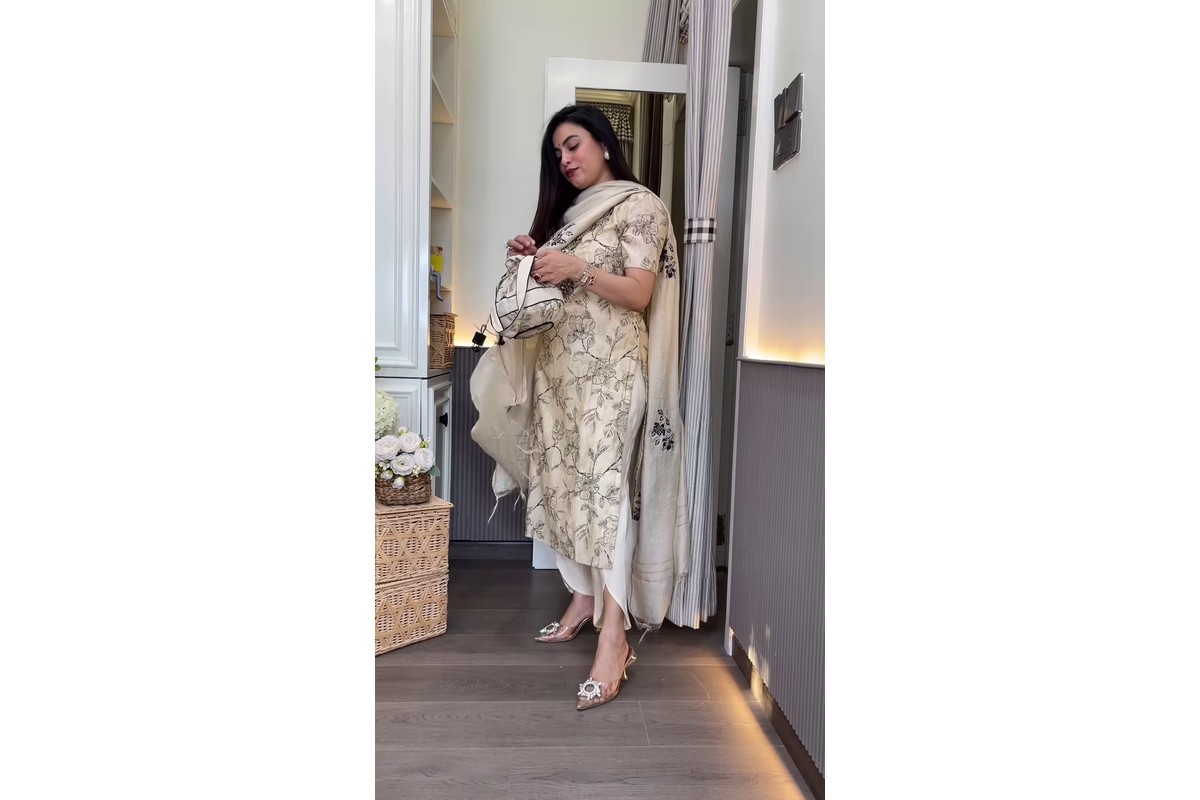
Buying a kurta set for temple visit days at Diwali comes down to two questions, in this order. What does the temple you are going to ask for? And does the set you are looking at online actually deliver it? Most advice stops at the first. This guide spends its time on the second: what to check on a product page before you order, because a name and a photo do not tell you the sleeve, the length, or even which design will be sent.
What follows is practical rather than prescriptive. Customs differ between temples, between regions and between communities, so treat this as a starting point and follow whatever the particular temple asks.
First, find out what your temple asks
Many temples expect clothing that covers the shoulders and the knees, and many prefer traditional Indian dress over western clothing. Some ask visitors to cover their heads; some are strict about it and some are not. A few have specific rules, such as no stitched garments in certain inner areas, that apply only to that temple.
If you are visiting somewhere unfamiliar, ask someone who has been, or look at what the temple itself says. Do this before you shop, because it decides what you are shopping for.
Where you cannot find out, dress a little more covered than you think is needed and carry a dupatta or a stole. Be clear about what that does, though. A dupatta lets you cover your head or shoulders on request. It does not override a rule: where a temple asks for a particular kind of dress, a stole over something else is not a substitute.
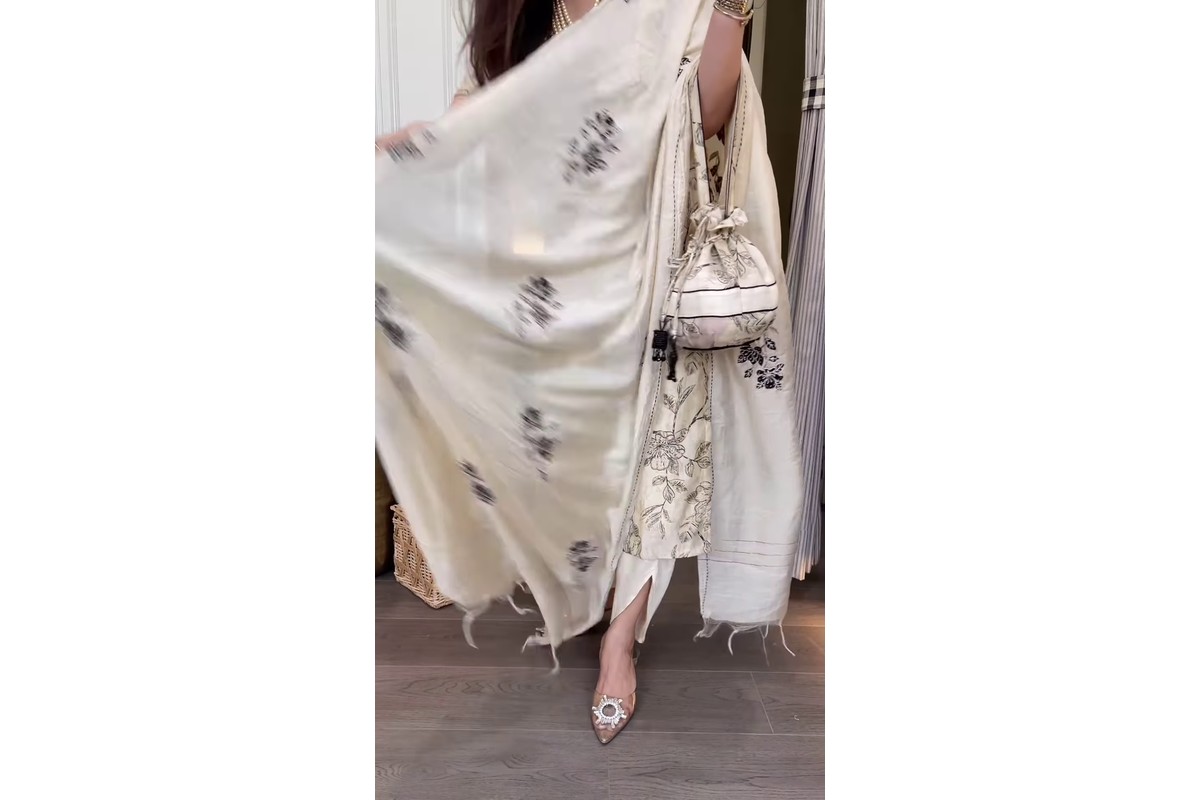
Kurta set for temple visit: six checks on the product page
1. The actual sleeve
A full sleeve or an elbow length sleeve settles the shoulder question without any extra layer. Do not take the sleeve from the main photo alone. Check the product description for the sleeve length, and look at every image, because short, cap and sleeveless styles turn up under names that do not mention them.
The Off-White Floral Cotton Kurta Set with Embroidered Dupatta at ₹99 is a fair test case. Check the product description for how far down the arm the sleeve comes before you decide it is enough for your temple.
2. The length on you, not on the model
A kurta that reaches the knee on a model in a photo may sit higher or lower on you. Check the product description for a length, and where it gives a word such as knee length with no number, ask the shop for the length of your size.
3. The seller’s measurements
The pages linked here offer sizes as letters, S to XXL, and give no chest or length in inches or centimetres. A letter is not a measurement, so ask the shop for the chest and length of the size you are considering. You will be sitting on the floor and standing up again, and a set that is snug when you stand is tight when you sit.
4. Transparency
Light colours and thin cloth can be more see through in daylight than they look in a studio photo, and a photo cannot settle it. Check the product description for a lining and for words such as sheer. A dupatta sold with a set is sometimes sheer by design, which matters if you were counting on it to cover anything. If the page is silent, ask the shop, and plan an inner layer in case.
5. Whether a dupatta is included
Check the product description for what the set includes. A kurta and pants set has no dupatta unless the page says so, however the model is styled. If the temple asks for a covered head, you then need a stole of your own.
6. Which design will actually be sent
Some pages show several styles in one gallery and offer only a Size choice. The Printed Kurta Set with Straight Pants at ₹99 is an example: trousers settle the floor question, but its photos show more than one style, some of them sleeveless. Ask the shop which design is being sent. If it cannot say, either choose a page where every photo would pass at your temple, or plan a dupatta or stole for the case where the one that arrives is bare at the shoulder.
Folded photos raise a similar question. The Lace-Trimmed Cotton Kurtis in Solid and Pastel Shades at ₹99 are photographed folded, not worn, so the pictures show the decoration and the colour and nothing about where the sleeve or the hem falls. Check the product description for both.

Sitting on the floor
You may be sitting cross legged for a while, standing up quickly when a queue moves, and sitting again.
- A-line, flared and gathered shapes fold around you and move with you.
- Straight kurtis with side slits work well, because the slit gives the knee room.
- Narrow skirts and pencil cuts do not. Neither does anything you have to hold down.
- Trousers or palazzos under a kurti are more comfortable on a stone floor than bare legs, and warmer on an early morning.
- Ankle length beats floor length. A floor length hem collects whatever is on the ground and trips you on steps.
Try the whole outfit at home first: sit cross legged, stand up, bend forward. Whatever needs adjusting there will need adjusting in the queue.
Fabric: what the page can and cannot tell you
Temples at Diwali are warm, close and slow moving, often with a lot of people and a lot of lamps in a small space. Check the product description for the fabric, and treat the name as a label rather than a test. Neither a fabric name nor a photo tells you how a piece will feel in a crowd, whether it will cling, or how it will look after an hour in a queue.
What you can do is test it yourself. Order early enough to wear the outfit at home for an hour before the day. And avoid anything so delicate that a mark from a flower, a smear of kumkum or a drop of oil would ruin it, because all three are likely.
Covering your head, if you need to
A dupatta is the usual solution and the usual problem, because an unpinned one slides off at the worst moment. A pin at the crown or just behind the ear, through the dupatta and a small amount of hair, holds it without showing.
Footwear you will take off
You will be leaving your shoes outside, often in a pile, sometimes a long walk from where you come out. Choose slip on rather than laced, since you will be removing them standing up, possibly holding a tray. Expect some barefoot walking on stone. If your temple has a shoe counter with tokens, use it.
Before you order, checked
- You know what the temple asks, or you have chosen the more covered option.
- Sleeve length confirmed from the description, not the main photo.
- Kurta length for your size confirmed in numbers, or asked for.
- Lining or sheerness checked, with an inner layer planned if unsure.
- Dupatta included or not, confirmed from the description.
- The design being sent confirmed with the shop where the gallery shows more than one.
- Ordered early enough to try it on at home and return it if it does not pass.
On that last point, a change of mind return has to be started within seven days of delivery, with the item unused and in its original packing, and the return postage is yours to pay.
For the ritual itself, the Lakshmi Puja step by step guide covers what happens and in what order, and what to wear for Lakshmi Puja at home handles the version of this question that happens in your own house. The Women’s Ethnic Wear range holds the sets mentioned here.

Frequently asked questions
What the temple asks, first. Then, on the product page: the sleeve length, the kurta length for your size, the seller’s measurements, whether the cloth or dupatta is sheer, whether a dupatta is included, and which design is being sent if the photos show more than one.
It varies by temple, region and community. Carry a dupatta or stole so you can cover on request, and pin it rather than relying on balance. A dupatta does not replace a dress rule where the temple has one.
Many temples prefer traditional Indian dress, and some ask for it. If you are unsure about a particular temple, ask someone who has been, or dress a little more covered than you think is needed.
No. Check the product description for what the set includes. A kurta and pants set has no dupatta unless the page says so, whatever the model in the photo is wearing.
Where a page shows several styles and offers only a Size choice, any of them may be the one sent. Ask the shop which design it is. If it cannot say, pick a page where every photo would pass at your temple.