

A comfortable diwali outfit all day is a harder brief than a comfortable outfit for an evening, because the day is genuinely long. Morning aarti on the floor, a round of visits, a heavy lunch, travel between houses in the afternoon, photographs at dusk and dinner late. Most festive clothing is designed for the photograph and not for the eleven hours around it, and by four in the afternoon the difference is painfully obvious.
This is what to choose instead, and why each choice works.
What a long day does to a fitted outfit
Three things change between morning and night, and a fitted garment is on the wrong side of all of them.
You eat, so your waist measurement is not the same at nine at night as it was at nine in the morning. You sit on the floor and get up repeatedly, which puts strain on exactly the seams that a close fit pulls tightest. And you get warmer and then cooler, so a garment that is snug in a cool morning becomes tight in a crowded afternoon.
A loose cut is not a concession on any of this. It simply does not have the problem.
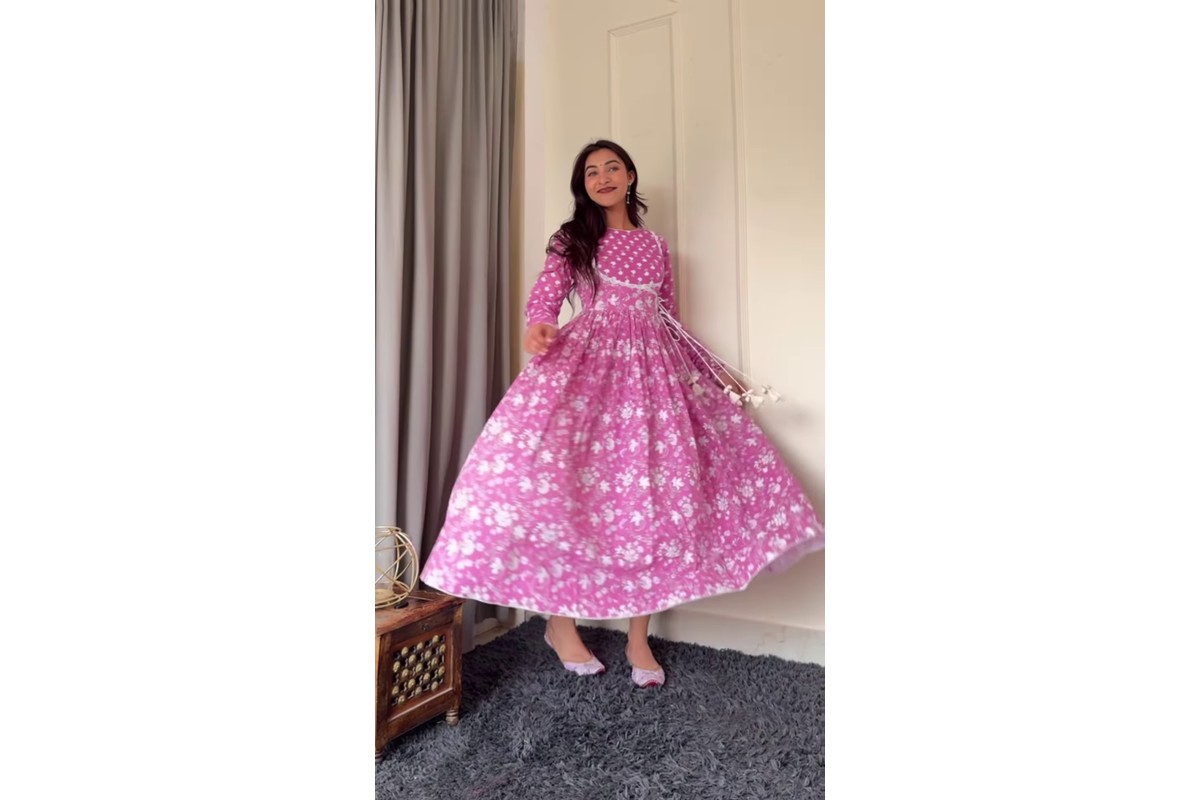
Sitting cross-legged, which decides more than anything else
If any part of the day involves a puja at home or a temple visit, this is the constraint to design around.
- A-line and flared kurtis fold around you when you sit and fall back into shape when you stand. They need less rearranging than a narrow cut.
- Anarkali cuts take this further, because the volume starts high. The bodice can still be fitted, so that part has to be the right size.
- Straight kurtis work if they have side slits, because the slit is what gives the knee room. Without slits they ride up.
- Narrow skirts and fitted trousers are the worst option. You will spend the puja managing the garment instead of attending to it.
The Floral Cotton Anarkali Dress with Full Sleeves at ₹99 is an example of the shape: a flared skirt with full sleeves. Check the product description for the bodice, and ask the shop for measurements, because a fitted top half still has to fit.
Eating all day, and what the waistband should do
The honest advice is to avoid a fixed waistband entirely on a festival day. A drawstring, an elasticated waist, a wrap tie or simply no waist at all will all leave you comfortable through a second helping.
Where there is a fixed waistband, the kurti over it matters. A longer kurti that sits below the waistband means nothing is visible and nothing digs in where anyone can see. A short top over a fixed waistband is the combination to avoid.
The Beige Cotton-Blend A-Line Kurti with Detailed Yoke at ₹99 is a simpler version: an A-line worn over whatever waistband you choose. A flare is looser below the waist. It is not a promise about the fit above it.
Travelling between houses
The afternoon is usually spent in a car, an auto or on a scooter, and that is where creasing happens. Cotton tends to crease and show it. Georgette and crepe usually crease less. A cotton blend often sits between the two and is the practical compromise for a day that starts formal and ends informal.
Two things help regardless of fabric. Sit on the back of the garment rather than letting it bunch under you, which sounds fussy but takes one second. And choose a print over a solid for the afternoon, because a print hides a crease that a flat colour advertises.

Oversized as a choice, not a size accident
There is a difference between a garment that is too big and a garment cut oversized. The second is drawn that way: the shoulder seam is placed low on purpose, the body is wide by design, and the proportions are balanced for the volume.
An oversized cut already has room built in, so there is no need to go up a letter for looseness. Which letter is yours is a separate question, and only the seller’s measurements answer it.
The Oversized Cotton Shirt with Heart Patches at ₹99 is a useful piece for the casual half of a festival day, worn over jeans or trousers for the afternoon visits when nobody is standing on ceremony.
Shoes, and the hour nobody plans for
A loose outfit solves the body and then the feet undo it. On a festival day you will be barefoot indoors, in shoes outside, in and out of a vehicle, and standing for longer stretches than usual, often on a hard floor.
Flats or a low block heel are the sensible answer, and slip on rather than laced if any part of the day involves a temple or a house where shoes come off at the door. A thin heel is the one thing that will end the day early, because a hard floor and a long evening punish it.
The hour nobody plans for is the late one. Early November is warm in the afternoon and genuinely cool after dark in much of the country, and a cotton outfit that was perfect at two is cold at ten. Keep a dupatta, a stole or a light jacket where you can reach it, rather than in the house you left two visits ago.
Three stages, three answers
Morning, for the puja
Cotton, A-line or anarkali, full or elbow sleeves, ankle length. Trousers underneath rather than bare legs on a cold floor. Dupatta pinned rather than balanced.
Afternoon, for visiting and travelling
A printed kurti or an oversized shirt with trousers. Something that recovers from a car journey and does not need rearranging at every doorstep.
Evening, for the photographs
This is the one place to allow a little more structure, because the evening is shorter. Even here, keep the waist adjustable and the sleeves clear of the diyas.
A comfortable diwali outfit all day, in six checks
- Can you sit cross legged in it and stand up without using your hands to arrange it?
- Will the waist still be comfortable after a large lunch?
- Do the sleeves stay clear of a flame when you raise your arm?
- Does it survive an hour in a car without looking slept in?
- Can you put it on by yourself in five minutes?
- Would you be happy wearing it for the last two hours of the night, not just the first two?
If the answer to all six is yes, the outfit is right regardless of what anyone else is wearing.
For planning which outfit goes on which day, what to wear each day of Diwali 2026 covers the whole five days, and kurti and palazzo sets for Diwali week goes further on the two piece combinations mentioned here. The Women’s Ethnic Wear range holds most of the shapes discussed.

Frequently asked questions
A-line and anarkali cuts, because the volume sits below the yoke and folds around you. A straight kurti works if it has side slits; without them it rides up.
For the casual parts of the day, yes, worn over trousers or jeans. There is no need to go up a letter for looseness, since the cut is already generous. Ask the shop for measurements if you are unsure of the size.
A drawstring, an elasticated waist or a wrap tie. If the waistband is fixed, wear a kurti long enough to sit below it.
Cotton tends to crease and show it; georgette and crepe usually crease less. A print hides creasing better than a flat colour.
Cotton for the morning and the heat, georgette or crepe once travel and an evening are involved. A cotton blend is the practical middle if you only want one outfit.