
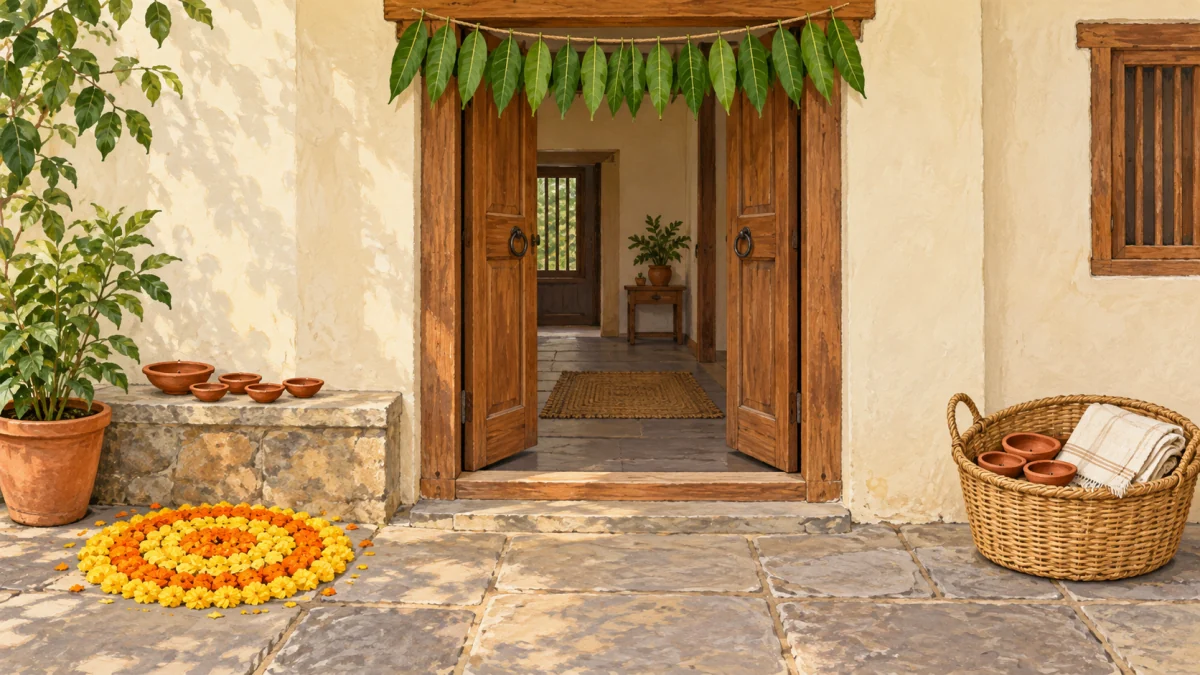
An eco-friendly Diwali is not a smaller or duller Diwali. Most of the festival’s traditions are already low-waste: clay lamps, flower garlands, rice-flour rangoli, sweets made at home and shared with neighbours. The waste came later, with plastic decorations, foam packaging, disposable everything, and fireworks that leave the air unbreathable for a week.
The fifteen changes below keep the whole festival and drop most of the harm. None of them asks you to give anything up, and several of them save money, which is not nothing in the most expensive month of the year.
Light
1. Clay and brass, not plastic and battery
A clay diya is fired earth. It burns cooking oil, and at the end of its life it goes back into a plant pot. A plastic “electric diya” is petroleum, a coin cell battery and a wire, and lasts one season before the bulb dies. Buy clay diyas from a potter or a shop that sources from one; buy one brass lamp that lasts a lifetime. The clay diya buyer’s guide covers how to make diyas last several years.
2. Cooking oil and cotton wicks
Mustard, sesame or any kitchen oil, and cotton wicks. Not paraffin lamp oil, not synthetic wicks. Both burn cleaner and both are what the tradition used.
3. Warm-white LEDs, used for years
String lights are fine if they are LED (a fraction of the power of the old incandescent strings), warm white so you need fewer to get the effect, and stored properly so they last five years rather than one. Wind them on cardboard; keep the box.
Decor
4. Fresh flowers and leaves, from the local market
A mango-leaf toran and marigold strings cost under ₹100, come from within a day’s drive, and compost. Buy them on the morning of Diwali, not a week ahead, so they are not wasted.
5. Reusable fabric decor for the rest
For the days before and after, pick decor you will use for years over anything that goes in the bin in November. A fabric or beaded door toran replaces a throwaway plastic one, and a reusable rangoli mat set wipes clean and comes out again every Diwali. They cost more once and nothing after that. The most sustainable decor is the piece you already own.
6. Natural rangoli materials
Rice flour for white lines. Turmeric for yellow, kumkum for red, dried and powdered petals for other colours, or simply marigold and rose petals laid in rings. Synthetic rangoli powder washes into drains; glitter powder is microplastic. If you use coloured powder, use it for outlines only and sweep it into dry waste afterwards. Easy rangoli designs for beginners has a flower-only design.
7. No thermocol, no foil, no plastic garlands
Thermocol decorations cannot be recycled in most Indian cities and break into beads that last forever. Foil and plastic garlands last one season. Whatever they are replacing, a cloth or paper alternative exists.
Fireworks
8. Fewer, or none
This is the single biggest change. Firecrackers add particulate matter, sulphur dioxide and metals to the air for days, at a time of year when northern India’s air is already at its worst. Several states restrict them; many cities have time windows and “green cracker” rules. Whatever the rule where you live, the practical version is: skip the loud and smoky ones entirely, limit sparklers and fountains to a short window, and spend the money on diyas instead. A rooftop of lamps is more beautiful than a rooftop of smoke.
If your family will not give them up completely, “green crackers” certified by CSIR-NEERI emit less, and a fixed budget and a fixed hour keep it contained. The Diwali safety guide covers the safety side.
Gifts
9. Gift things that get used
Sweets, dry fruits, diyas, a toran, a puja kit. Not showpieces, not another mug. The best eco-friendly gift is one that does not end up in a cupboard. Our gifting guide under ₹500 is built around this.
10. Less packaging, or reusable packaging
A hamper in a rigid box the recipient will keep, a steel dabba, a cloth bag or a tin beats a box in a box in cellophane. If you receive over-packaged gifts, keep the boxes for next year’s gifting.
11. No plastic-wrapped assorted sweet boxes from unknown sources
Beyond the packaging, they are often stale. One good sweet in a sealed tray, or homemade, or dry fruits.
Food
12. Cook, or buy from someone who cooks
Homemade sweets and namkeen use ghee, flour, sugar and nuts, and no packaging. If you buy, buy from a halwai in a reusable container you bring, or from a seller who packs in cardboard rather than plastic. Our easy sweets recipes and snacks guide are the make-at-home version.
13. Steel plates and glasses for guests
Not disposable plastic or foam. A stack of steel plates costs less than three Diwalis of disposables and washes in ten minutes.
Afterwards
14. Sort the waste
- Flowers, leaves, food: compost or a plant pot.
- Clay diyas: crush into garden soil, or keep if intact.
- Powder rangoli: dry waste, not the drain.
- Paper, cardboard: recycling.
- Firework debris: dry waste, never burned.
- LEDs that have died: e-waste collection, not the bin.
15. Do not immerse anything in a water body
Clay idols with chemical paint, flowers in plastic bags, diyas floated in the lake: all end up on the bottom. Immerse a clay idol in a bucket at home and pour the water on plants, or keep the idol for next year. Float diyas in a bowl, not a river.
What this costs
Less, over three years. As a rough guide at typical market prices, a clay-and-brass, fabric-and-flower, no-firecracker Diwali costs about ₹2,500 the first year for reusable items and under ₹800 every year after for oil, wicks, flowers and sweets. A plastic-and-firecracker Diwali can easily cost ₹3,000 to ₹10,000, every single year.
What this does not require
It does not require giving up light, colour, sweets, gifts, guests or noise from the aarti bell. Diwali was low-waste before it was anything else. The changes above are mostly a return to that.
For the rest of the practical side, the Diwali safety guide and the cleaning and preparation timeline fit alongside this. Reusable lamps and decor are in Diyas & Lights and Home Decor.